caster joints
^ Techniques infobox ^^
| image | Caster-joint.scad.png |
| designers | [[user:tim|Timothy Schmidt]] |
| date | 2013 |
| vitamins | |
| materials | |
| transformations | |
| lifecycles | |
| parts | [[frames|Frames]], [[bolts|Bolts]], [[nuts|Nuts]], [[end_caps|End caps]], [[casters|Casters]] |
| techniques | [[bolting|Bolting]], [[tri_joints|Tri joints]], [[shelf_joints|Shelf joints]] |
| tools | [[wrenches|Wrenches]] |
| git | |
| files | |
| suppliers | |
| reversible | true |
Introduction
Casters are one of the most widely used parts and come in many shapes and sizes, often with a 4-hole mounting plate.
Challenges
Mounting the caster securely through all four mounting holes near a tri-joint (which tend to be at the corners of projects, exactly where casters want to be) isn't easily accomplished.
Approaches
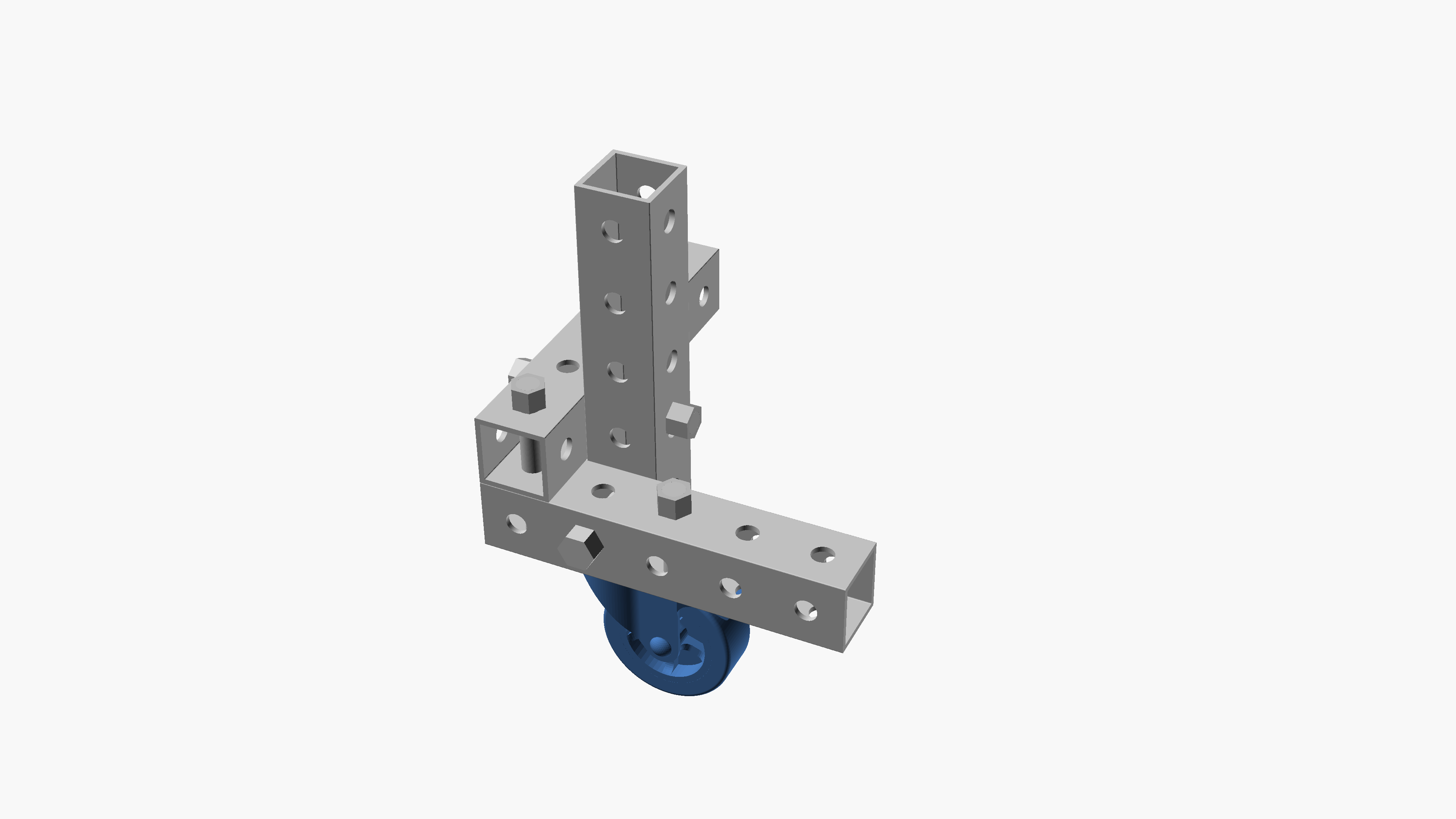
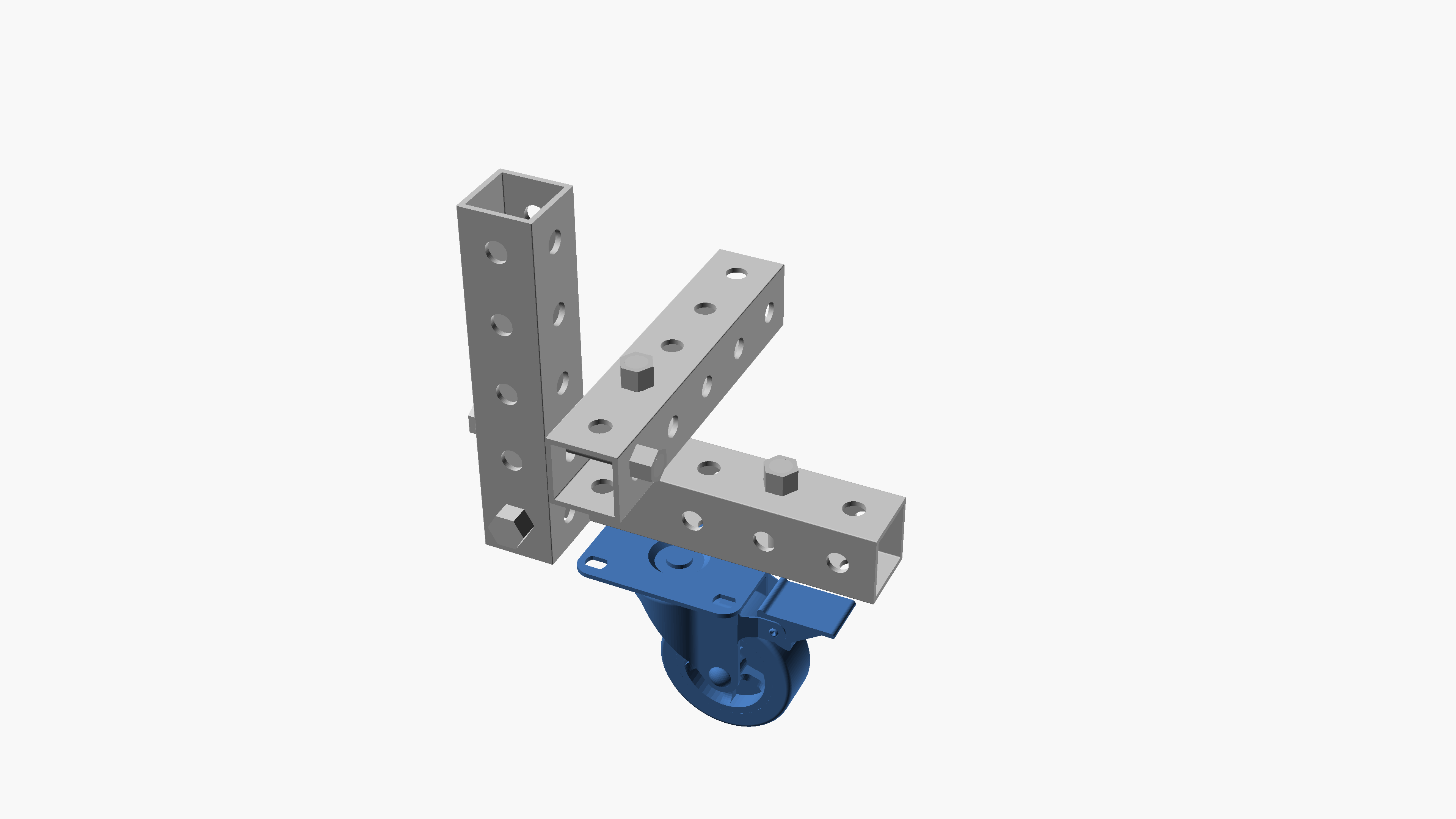
One corner configuration secures the caster at two points and centers the vertical frame member on the caster. The other applies significant force, with the possibility of a bending moment on the caster mounting plate.