three point hitches
^ Projects infobox ^^
| image | Three-point-hitch.scad.png |
| designers | [[user:tim|Timothy Schmidt]] |
| date | 2021 |
| vitamins | |
| materials | |
| transformations | |
| lifecycles | |
| tools | |
| parts | [[frames|Frames]], [[nuts|Nuts]], [[bolts|Bolts]], [[end_caps|End caps]], [[plates|Plates]] |
| techniques | [[tri_joints|Tri joints]], [[space_frames|Space frames]], [[trusses|Trusses]], [[bolting|Bolting]] |
| files | |
| suppliers | |
| git | |
Introduction
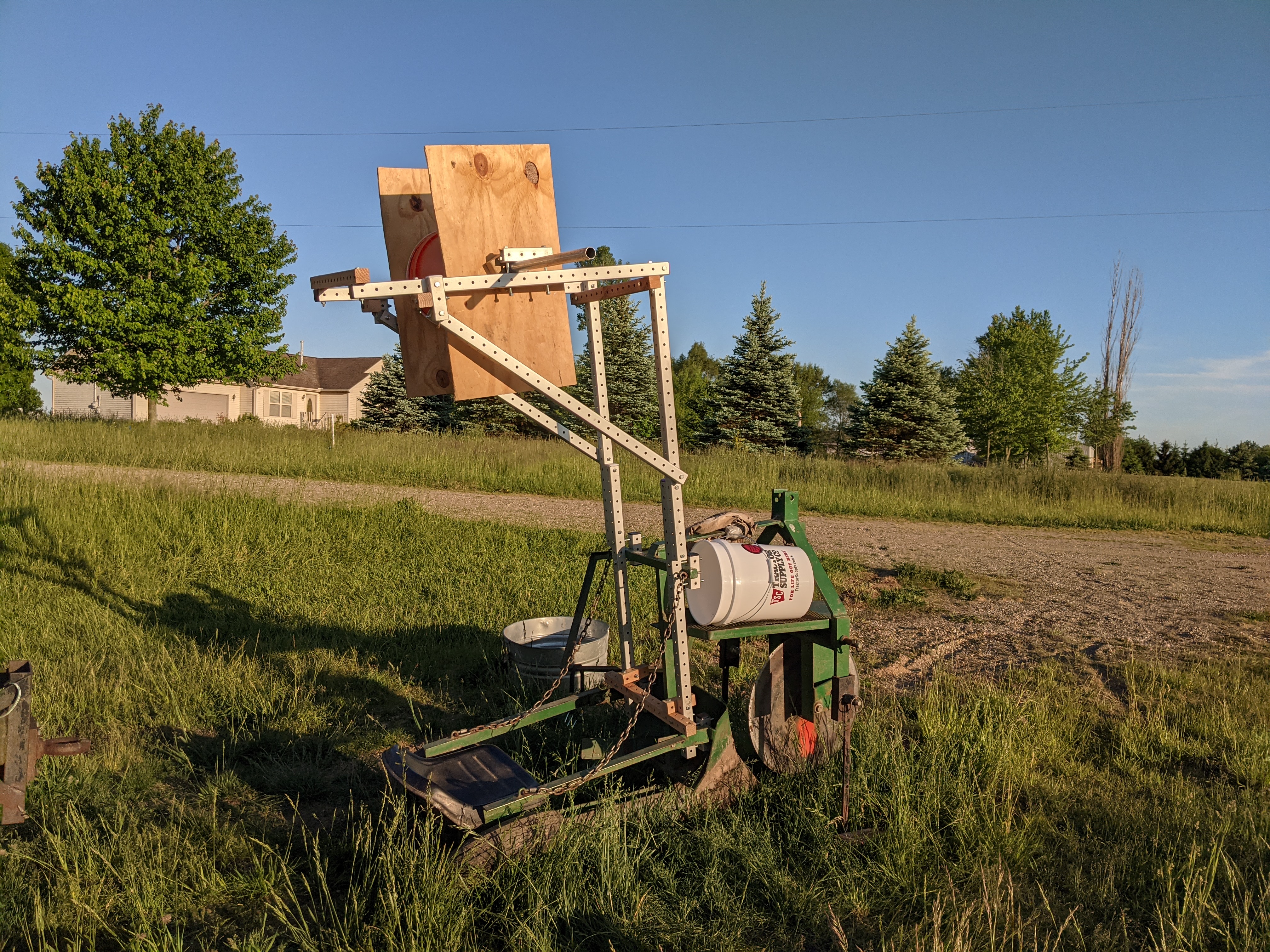
The three-point hitch is a widely used type of hitch for attaching ploughs and other implements to an agricultural or industrial tractor. The three points resemble either a triangle, or the letter A. Three-point attachment is the simplest and the only statically determinate way of joining two bodies in engineering.
Challenges
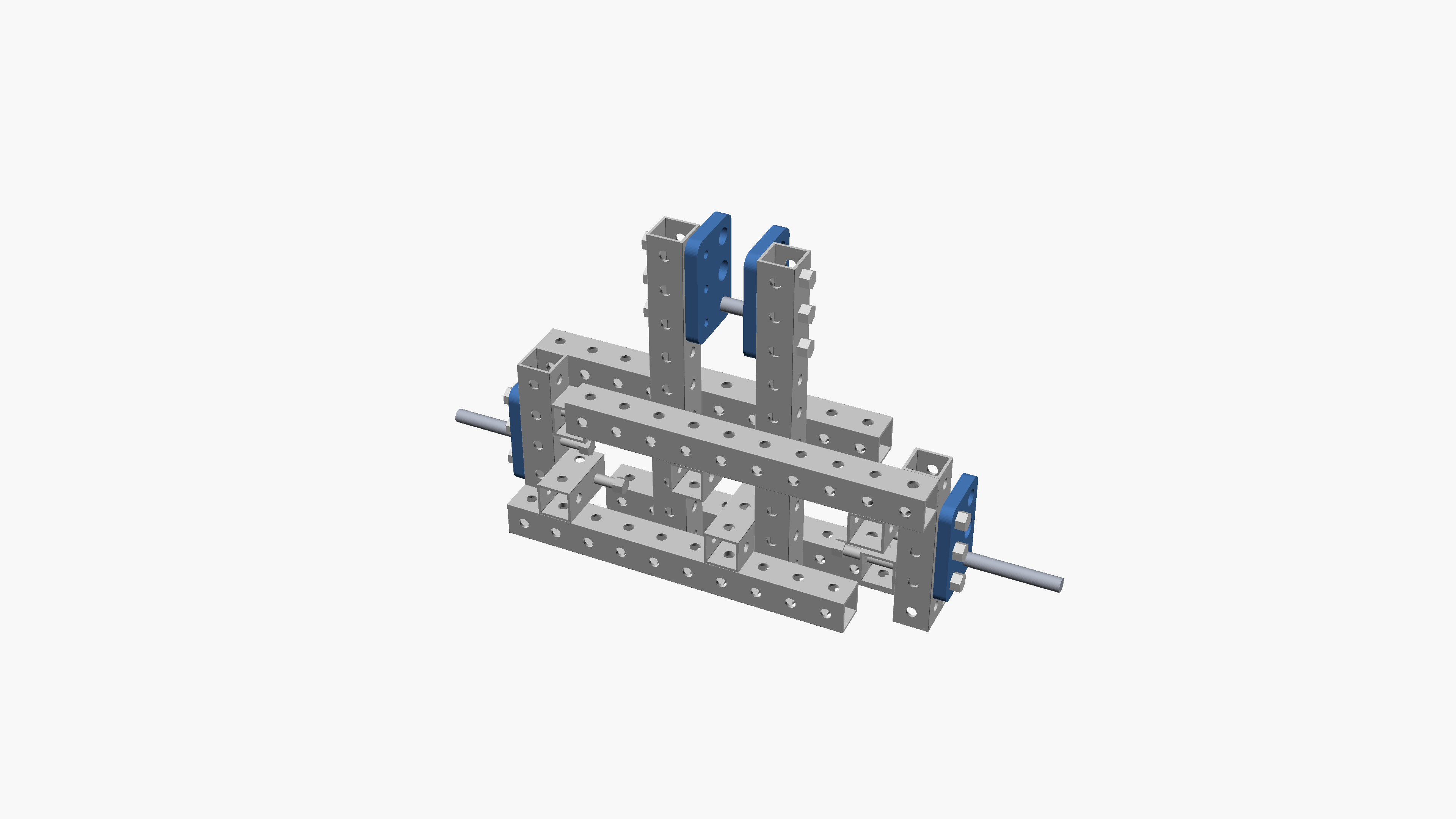
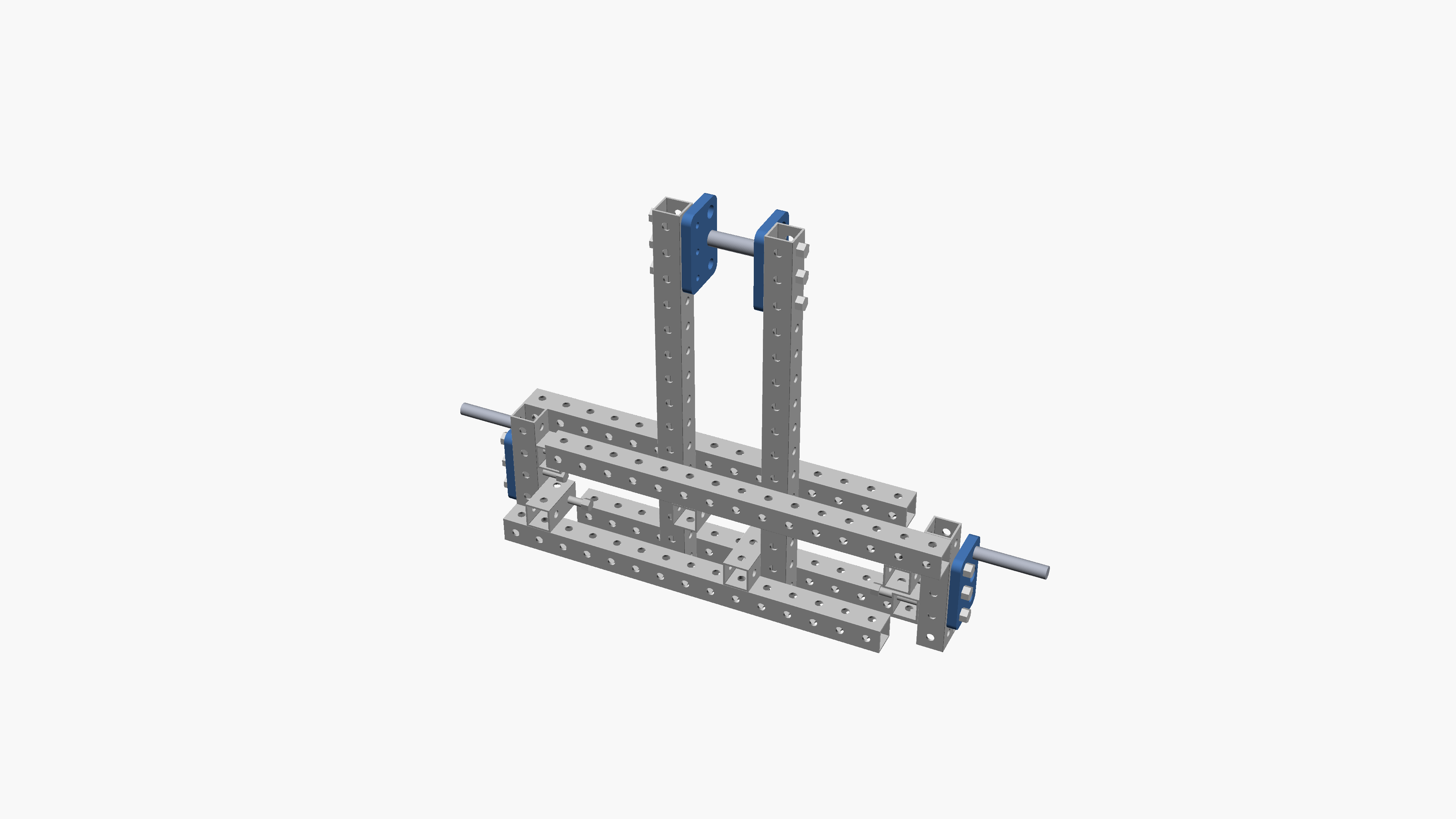
How to match industry standard sizes using as few parts and vitamins as possible.
Size categories
There are five different hitch sizes, called categories. The higher category hitches have sturdier lift arms and larger connector pins.
{| class="wikitable" border="1"
|-
! style="text-align: left; padding-left: 1em; padding-right: 1em;" | Category
! style="text-align: left; padding-left: 1em; padding-right: 3em;" | Tractor power
! style="text-align: left; padding-left: 1em; padding-right: 3em;" | Top link pin diameter*
! style="text-align: left; padding-left: 1em; padding-right: 3em;" | Lift arm pin diameter
! style="text-align: left; padding-left: 1em; padding-right: 3em;" | Lower hitch spacing
|-
| style="text-align: center;" | 0
| style="padding-left: 1em;" | Up to 20hp
| style="padding-left: 1em;" | 5/8 in
| style="padding-left: 1em;" | 5/8 in
| style="padding-left: 1em;" | 20 in
|-
| style="text-align: center;" | 1
| style="padding-left: 1em;" | 20 to 45hp
| style="padding-left: 1em;" | 3/4 in
| style="padding-left: 1em;" | 7/8 in
| style="padding-left: 1em;" | 28 in
|-
| style="text-align: center;" | 2
| style="padding-left: 1em;" | 40 to 100hp
| style="padding-left: 1em;" | 1 in
| style="padding-left: 1em;" | 1+1/8 in
| style="padding-left: 1em;" | 34 in
|-
| style="text-align: center;" | 3
| style="padding-left: 1em;" | 80 to 225hp
| style="padding-left: 1em;" | 1+1/4 in
| style="padding-left: 1em;" | 1+7/16 in
| style="padding-left: 1em;" | 40 in
|-
| style="text-align: center;" | 4
| style="padding-left: 1em;" | More than 180hp
| style="padding-left: 1em;" | 1+3/4 in
| style="padding-left: 1em;" | 2 in
| style="padding-left: 1em;" | 48 in
|}
There are also variants to the above categories denoted by N, (narrow). These utilize the pin sizes of the listed category, but the width of a category one step lower. The N variations are common in "quick hitches" and allow larger tractors to easily hook onto smaller utility implements.
:* refers to implement end; tractor end not specified
Approaches
{{:file:plate-three-point-hitch.scad.png|Plate adapts to 5/8 inch, 3/4 inch, 7/8 inch pins for category 0 and 1}}
Attachments
- Backhoes
- Cement mixers
- PTO stump grinders
- Trenchers
- Scoop pans
- Wood chippers
- Post drivers
- Chain harrows
- Cultipackers
- Land levelers
- Soil pulverizers
- Cultivators
- Subsoilers
- Harley rakes
- Finishing mowers
- Flail mowers
- Sickle bar mowers
- PTO fertilizer spreader
- Pine needle rakes
- Sprayers
- Straw blowers
- Seed planters
- Potato plows
- Booms
- Carry alls
- Sweepers