trusses
^ Techniques infobox ^^
| image | Truss-spacers.scad.png |
| designers | Phil and RJ Jergenson, [[user:tim|Timothy Schmidt]] |
| date | |
| vitamins | |
| materials | |
| transformations | |
| lifecycles | |
| parts | [[frames|Frames]], [[nuts|Nuts]], [[bolts|Bolts]], [[end_caps|End caps]] |
| techniques | [[bolting|Bolting]], [[triangles|Triangles]] |
| tools | [[wrenches|Wrenches]] |
| git | |
| files | |
| suppliers | |
| reversible | true |
Introduction
A truss consists of frames connected at joints. Trusses are typically composed of triangles because of the structural stability of that shape and design.
Challenges
A triangle is the simplest geometric figure that will not change shape when the lengths of the sides are fixed. In comparison, both the angles and the lengths of a four-sided figure must be fixed for it to retain its shape.
Approaches
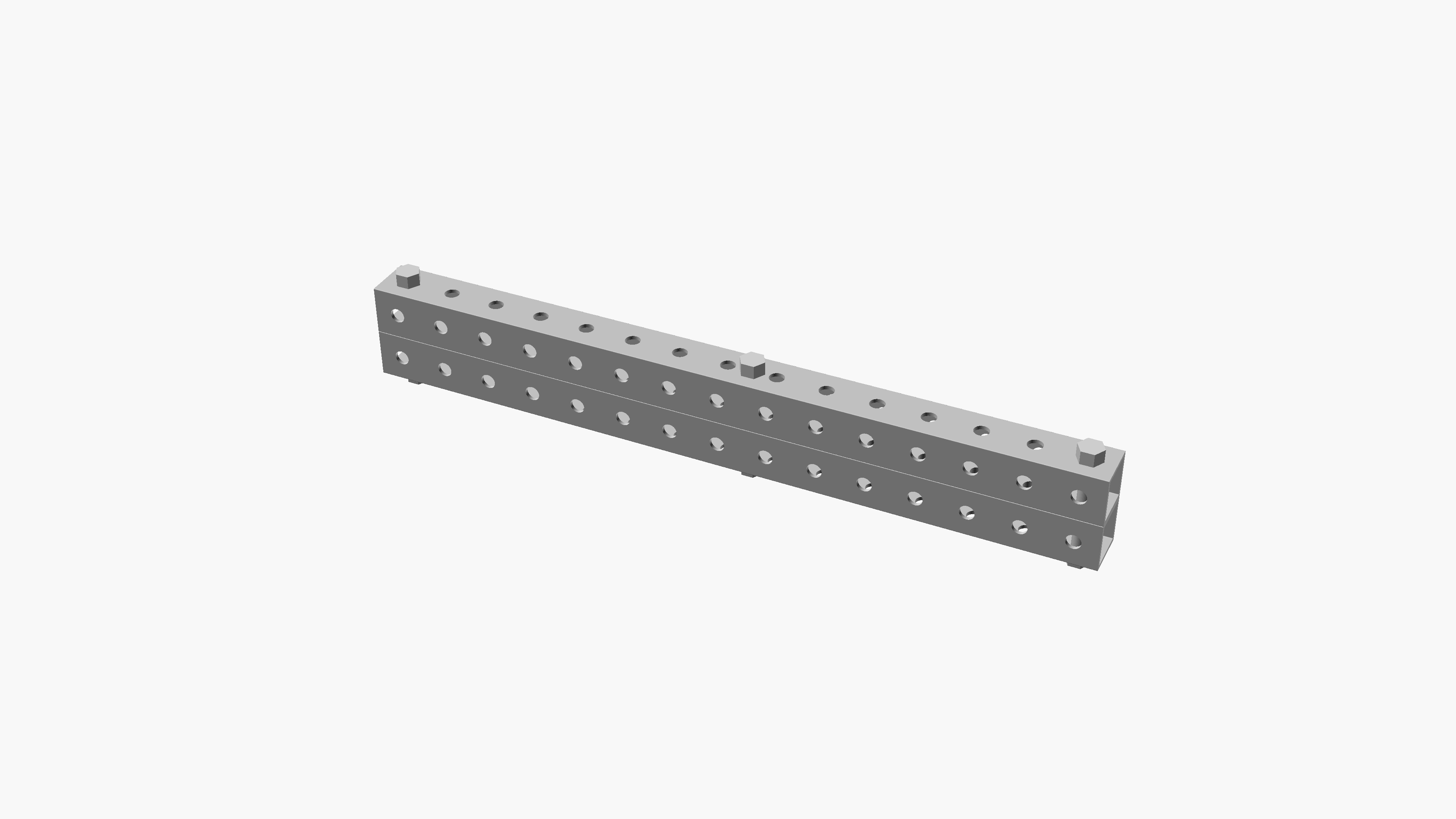
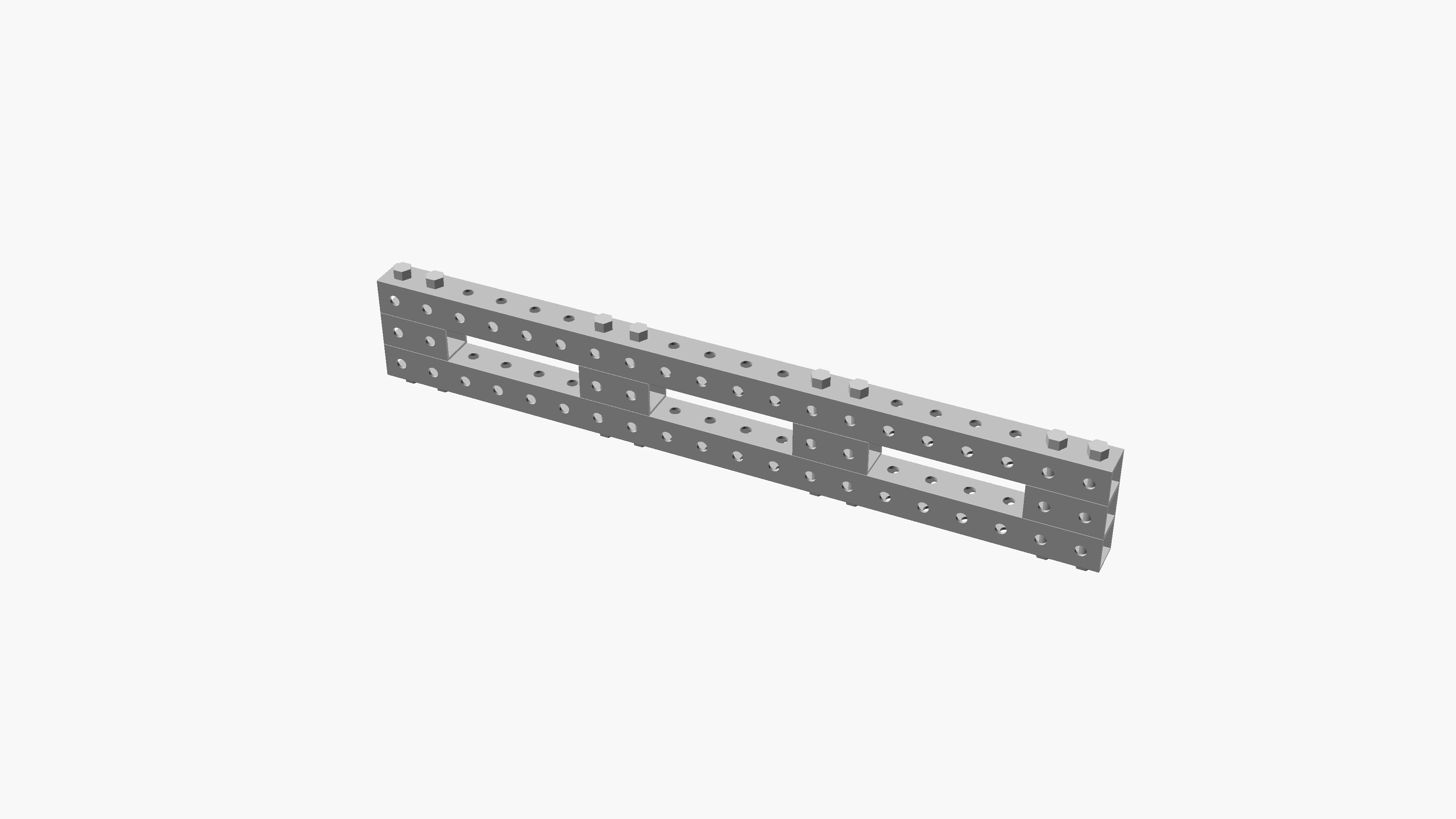 stacked washers" loading="lazy">
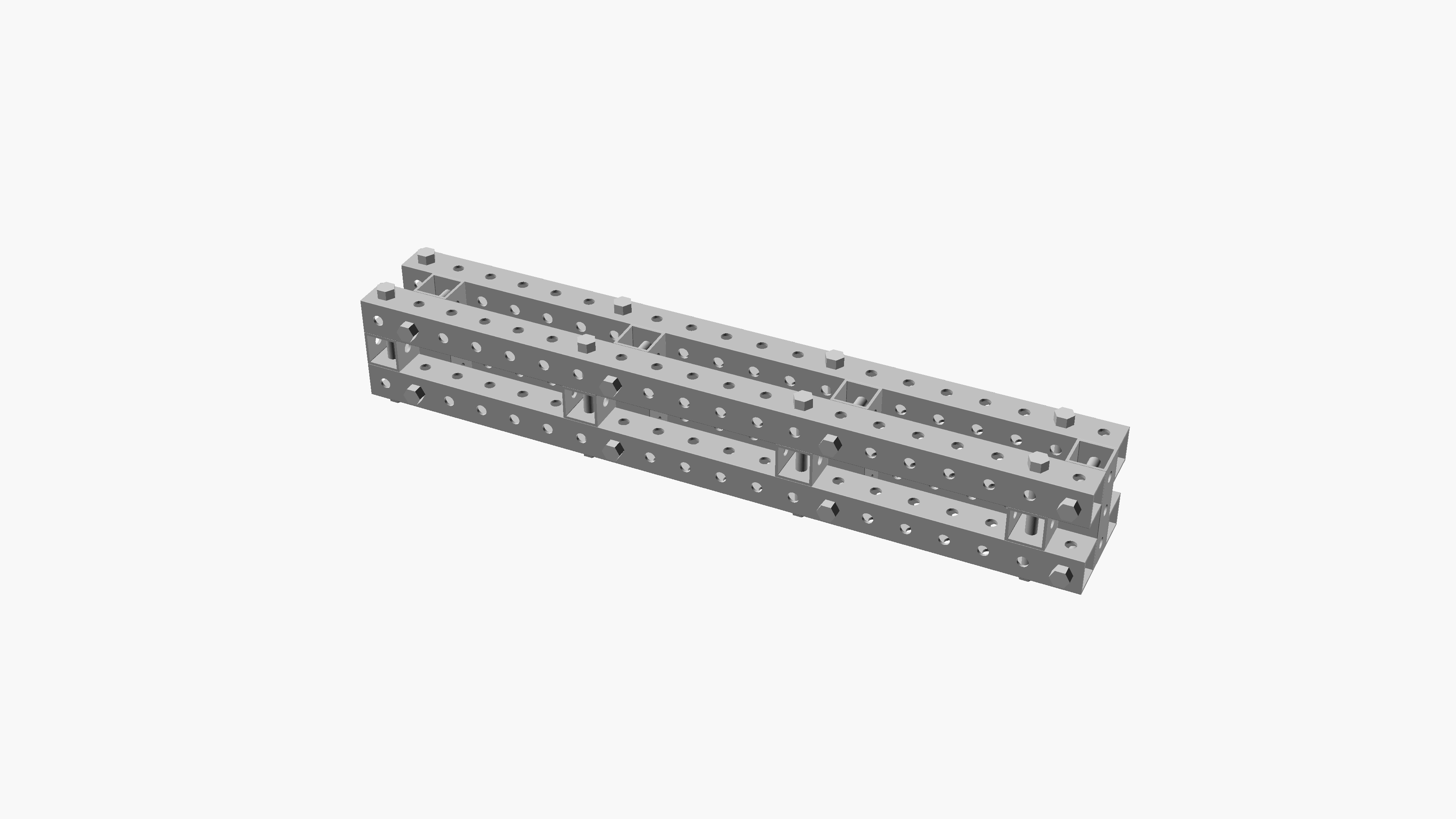 tri joints" loading="lazy">
- 2, 3, 4, 5 wide for similar function as 2040, 2060, 2080, 20100 extrusions. bolted across in an alternating diamond pattern for widths > 3 and bolt-length of 3.